
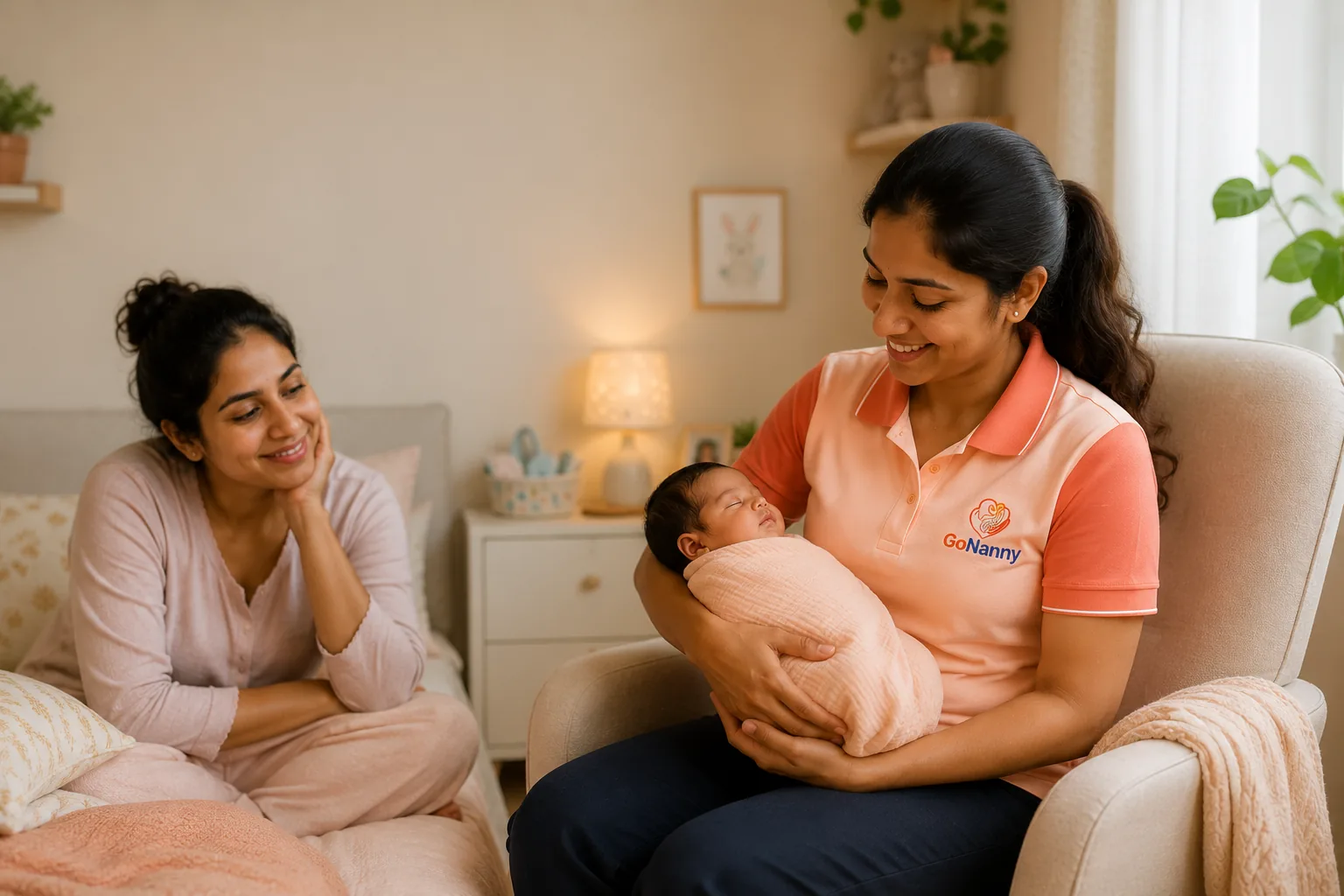
The first year with your baby changes fast. What worked at six weeks doesn't work at six months, and what works at six months doesn't work at ten. If you're looking for a nanny for your infant in Bangalore, the question isn't just "who's available" — it's "who's right for this stage."
This guide walks through what actually matters when choosing infant care in Bangalore: the types of care available, what to check before you hire, and how the right fit changes as your baby grows through the first year.
Why infant care is different from general childcare
A nanny for a 3-year-old and a nanny for a 3-month-old are doing almost entirely different jobs. Infant care isn't just "watching the baby" — it involves things a general caregiver may not be trained for:
- Reading hunger, sleep, and discomfort cues in a baby who can't tell you what's wrong
- Safe sleep practices (back-sleeping, no loose bedding, correct room temperature)
- Bottle prep and feeding schedules, especially for breastfed babies transitioning to bottles
- Recognizing early signs of illness or something that needs a doctor's attention
- Handling a newborn's fragile immune system — hygiene isn't optional, it's constant
This is why "any nanny" isn't the same as "a nanny trained for infants." When you're evaluating candidates, ask specifically about their experience with babies under one, not just childcare experience in general.
Types of infant care available in Bangalore
Parents in Bangalore generally choose from three infant care models. Each fits a different situation.
1. Live-In Nanny. A live-in nanny stays with your baby around the clock, which matters in the early months when feeding and sleep schedules don't follow a 9-to-5 pattern. This tends to work best for parents with unpredictable work hours or frequent travel, households without extended family nearby to share night duties, and babies with reflux, colic, or other conditions that need frequent monitoring.
2. Day Care Nanny (In-Home). A day care nanny comes to your home for a defined window, usually covering a parent's work day. This is the most common choice for infants because your baby stays in a familiar environment instead of adjusting to a new one, you avoid exposing a very young immune system to a room full of other infants, and one caregiver means consistent routines, which matters a lot for young babies.
3. Daycare Centers. Daycare centers work for some families, but most pediatricians recommend waiting until at least 6-12 months before placing an infant in a group care setting, mainly because of infection exposure. If you're weighing this option against an in-home nanny, it's worth understanding the tradeoffs in detail before deciding.
What to check before you hire an infant nanny
Whichever model you choose, these are non-negotiable checks for infant care specifically: recent, hands-on newborn or infant experience; comfort with safe sleep practices and bottle prep; a clear answer on handling a fever or choking emergency; and a verified background, not just a reference from a friend.
At GoNanny, every caregiver goes through Aadhaar-based verification, address checks, and background screening before she's matched with a family — and for infant placements specifically, we prioritize caregivers with direct newborn and infant experience, not just general childcare background.
How infant care needs change across the first year
One thing many first-time parents don't plan for: the kind of care your baby needs shifts noticeably across the year. A nanny who's great in month two isn't automatically the right fit in month ten.
- 0–3 months: Focus is almost entirely on feeding, sleep, and soothing. This is often when a Japa maid (postpartum and newborn specialist) is most valuable, especially if you're also recovering physically.
- 4–6 months: Routines start forming. Naps become more structured, and solid foods may be introduced. Consistency becomes more important than round-the-clock flexibility.
- 7–12 months: Mobility begins — rolling, crawling, eventually standing. Your caregiver now needs to be actively babyproof-aware, not just watch. This is also when some families start considering a transition from live-in to day care hours as their own routines stabilize.
If you started with a Japa maid for the newborn phase, it's worth having a conversation partway through the year about whether your care needs have shifted enough to switch to a different service type.
Questions to ask before you commit
Before finalizing any nanny for your infant, these questions tend to surface the most useful answers:
- "Have you cared for a baby under 6 months before? What did a typical day look like?"
- "What would you do if the baby had a fever and I couldn't be reached immediately?"
- "How do you handle disagreements between what I've asked for and what you think is right?"
- "Are you comfortable with [your specific feeding method]?"
- "What's your experience with safe sleep practices?"
A caregiver's answers here tell you far more than a resume does.
Conclusion
Choosing a nanny for your infant in Bangalore isn't about finding "a good nanny" in the abstract — it's about finding the right fit for exactly where your baby is right now, with the understanding that this will likely change over the year. Whether that's a Japa maid for the newborn stage, a live-in nanny for round-the-clock support, or a day care nanny once routines settle in, the verification and trial process matters more for infants than for any other age group.
If you're ready to start the search, GoNanny's team can walk you through which care type fits your baby's stage and match you with background-verified caregivers experienced specifically with infants.
Frequently Asked Questions
At what age can I start using a day care nanny instead of a live-in?
There's no fixed rule — it depends on your baby's routine and your own schedule. Many families transition once feeding and sleep settle into a predictable pattern, often somewhere between 3 and 6 months, but some stay with live-in support longer if night care is still needed.
Is a Japa maid the same as an infant nanny?
Not quite. A Japa maid specializes in the postpartum period, typically the first 40 days, focusing on newborn care and supporting the mother's recovery. An infant nanny is a broader role covering ongoing daily care through the first year and beyond.
How do I know if a nanny is actually experienced with infants and not just childcare in general?
Ask specifically about babies under one, not children in general, and ask for references from families with infants. A caregiver who's mainly worked with toddlers or school-age kids may not be comfortable with newborn-specific needs like bottle prep or safe sleep practices.
What if my baby has specific needs, like reflux, allergies, or a medical condition?
Let GoNanny know upfront during the matching process. We prioritize caregivers who already have hands-on experience with the specific need you mention, whether that's reflux management, allergy awareness, or another condition, instead of assigning someone who's never handled it before.
Should I hire a nanny before or after my baby is born?
Most families start the search 4-6 weeks before the due date, since verified caregivers with infant experience get booked up, and it gives time for a trial period before you actually need the support.
Choosing care for your baby's first year? GoNanny matches Bangalore families with background-verified caregivers experienced specifically with infants. Get in touch and we'll help you find the right fit for this stage.